Closure orders for illegal vape shops: what the 31 July Home Office deadline could change
The Home Office consultation on longer premises closure orders closes on 31 July 2026. Here is what could change, what remains current law, and what lawful UK vape retailers should take from the latest Newcastle-under-Lyme case.
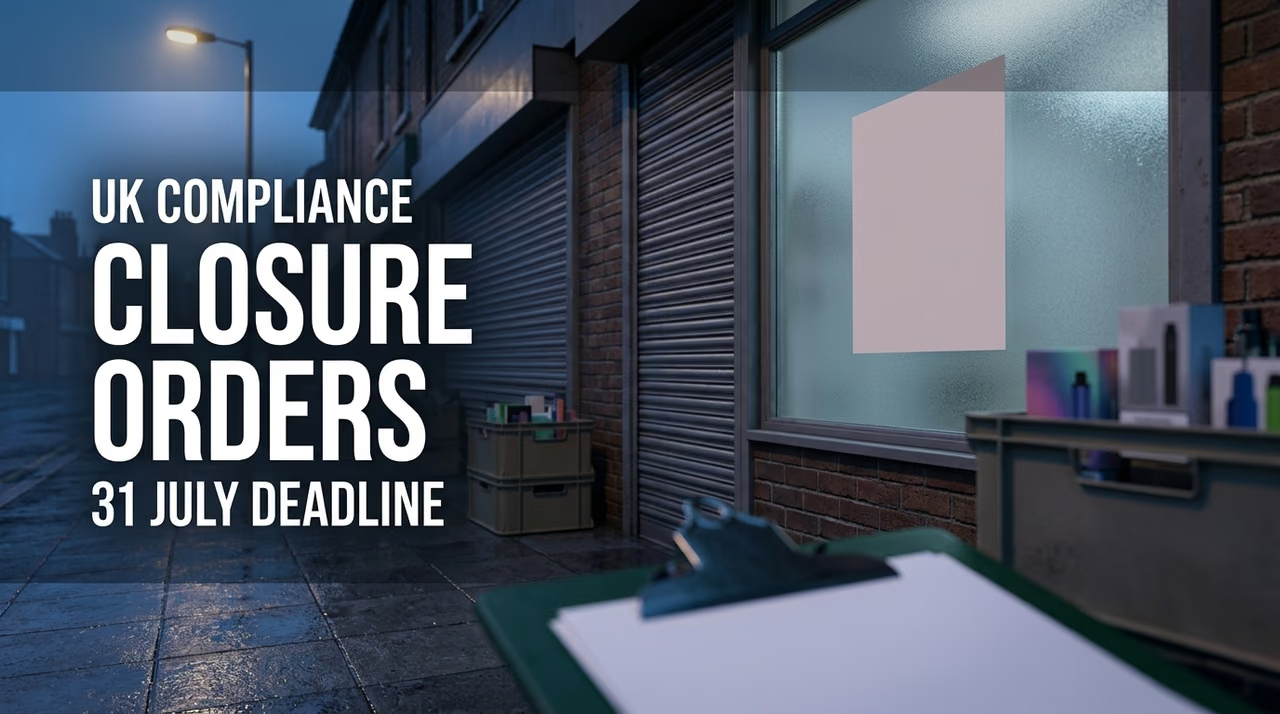
The Home Office consultation on longer premises closure orders closes at 11.59pm on 31 July 2026. For UK vape retailers and adult buyers, the key point is simple: that deadline does not automatically change the law tonight. It is the end of a consultation on whether the maximum duration of closure orders should be increased.
The current closure-order framework still applies unless and until regulations are made. Under the Anti-social Behaviour, Crime and Policing Act 2014, a magistrates' court can make a closure order for up to three months under section 80, and section 82 allows an extension so the total period does not exceed six months overall (legislation.gov.uk, section 80; legislation.gov.uk, section 82).
What may change is the maximum possible consequence for premises linked to serious nuisance, disorder or criminal behaviour. The Home Office is consulting on whether the overall maximum should rise to up to 12 months, including extensions, while keeping court oversight in place (Home Office consultation document).
That matters because closure orders are already being used in illegal-vape enforcement. On 29 July 2026, Newcastle-under-Lyme Borough Council said a second Newcastle town-centre shop had been forced to close in one month after illegal vape stock issues. Cobra Vape Shop received a three-month closure order after officers seized 71 illegal vapes with an estimated retail value of £923, according to the council (Newcastle-under-Lyme Borough Council).
What closure orders can do under current law
Closure orders are premises powers. They are not vape-specific, but they can be used where a premises is associated with serious nuisance, disorder or criminal behaviour. The Home Office consultation explains that police and local authorities can ask a magistrates' court to issue a closure order in those circumstances (GOV.UK consultation page).
The current legal route is court-controlled. Section 80 of the 2014 Act says the court may make a closure order only if the statutory conditions are met, and the maximum period specified in that section is three months (legislation.gov.uk, section 80). Section 82 then allows an extension application, but the extended order must not run for more than six months in total from the date the original order was made (legislation.gov.uk, section 82).
For more background on how closure orders fit into recent illegal-vape enforcement, see our guide to why UK vape shops are being closed. This article focuses on the new consultation deadline and what may change next.

Closure orders remain court-controlled under the current framework.
What the Home Office is consulting on
The consultation does not say every closure order will become 12 months. It asks for views on increasing the maximum duration of closure orders issued under section 80, the maximum extension period under section 82, and the maximum overall duration of an extended order (GOV.UK consultation page).
The legal mechanism comes from the Crime and Policing Act 2026. Section 3 of that Act inserts a new section 83A into the 2014 Act, giving the Secretary of State power to alter the maximum periods for closure orders by regulations. It also requires consultation with appropriate persons before regulations are made (legislation.gov.uk, Crime and Policing Act 2026 section 3).
The Home Office proposal is to amend the maximum duration from six months to 12 months, inclusive of any extension. The consultation document also says an initial closure order could last for 12 months if the court considered that necessary, with extension available where the initial order was for less than 12 months (Home Office consultation document).
The court safeguard is central. The Home Office states that closure orders would continue to be made by the court on application by a local responder, and that a full 12-month order would only be granted if the court was satisfied it was necessary on the facts (Home Office consultation document).
Why the Newcastle-under-Lyme case matters
The Newcastle case shows the current three-month maximum being used in an illegal-vape setting. Newcastle-under-Lyme Borough Council reported that officers executed a warrant at Cobra Vape Shop on 16 July 2026 and seized 71 illegal vapes, with an estimated retail value of £923. Magistrates at North Staffordshire Justice Centre granted a three-month closure order on 28 July 2026, and the premises was due to remain closed until mid-October (Newcastle-under-Lyme Borough Council).
The council said this was the second Newcastle town-centre shop forced to close in one month after illegal-vape stock issues, following a separate closure involving illegal tobacco and vapes at Simba's on High Street (Newcastle-under-Lyme Borough Council).
That does not mean the Home Office proposal is targeted only at vape shops. Closure orders are broader premises powers. But illegal vape and tobacco cases are part of the high-street enforcement context the Home Office is discussing when it asks whether longer orders could help tackle illegality and reduce repeat court applications (Home Office consultation document).
For rogue premises, the practical difference could be significant if regulations are later made. A three-month enforced closure is already a serious trading consequence. A possible 12-month maximum would create a much larger premises-level risk in cases where a court accepts that a longer order is necessary and proportionate.

The Newcastle case grounds the consultation in a current illegal-vape enforcement example.
What lawful retailers should do now
Lawful adult-facing vape retailers should not treat the consultation as a reason to guess at future enforcement policy. The more useful response is to keep evidence tidy before anyone asks for it.
MHRA guidance says e-cigarette and vape products may not legally be supplied until the relevant notification has been published on the Great Britain and/or Northern Ireland notified-products list, with historic notifications continuing to be legal for supply where applicable (MHRA retailer and producer guidance). The same guidance says retailers should check published notifications when procuring stock and ask suppliers for details where a product cannot be found (MHRA retailer and producer guidance).
The core format limits also remain basic due-diligence checks. MHRA guidance states that TRPR requirements for products sold to end consumers include a maximum nicotine concentration of 20mg/ml, a maximum 10ml size for refill containers, and a maximum 2ml size for e-cigarettes (MHRA retailer and producer guidance). For a deeper product-format primer, see our TPD imported e-liquid checklist.
Age controls matter too. MHRA guidance says retailers must operate suitable age-verification policies and must not sell vaping products to people under 18, with Trading Standards enforcing the age-of-sale rules (MHRA retailer and producer guidance).

Supplier records, invoices, product checks and age-verification evidence should be easy to retrieve.
Retailer compliance checks before enforcement becomes a problem
- Check the MHRA notification status for every nicotine-containing vape and e-liquid product before supply.
- Keep supplier details, invoices, product batch information and purchase records in a form staff can retrieve quickly.
- Check product format against UK limits, including nicotine strength, refill-container size and e-cigarette capacity.
- Train staff on age verification and keep a clear under-18 refusal process in place.
- Remove suspect stock promptly, record what was removed, and keep evidence of any supplier queries or corrective action.
This is not about finding loopholes. It is about being able to show that products, paperwork and staff procedures match the rules that already apply.
What adult buyers should take from it
For adult UK vapers, the takeaway is not that every vape shop is under suspicion. It is that enforcement is increasingly visible where authorities believe illegal or non-compliant products are being sold.
Be cautious with products that appear inconsistent with UK rules: very large nicotine-containing capacities, nicotine strengths above 20mg/ml, unclear labelling, missing UK notification details, or packaging that looks unlike adult-facing regulated retail stock. MHRA guidance sets out the 20mg/ml, 10ml and 2ml retail-facing limits and explains that products should be on the relevant notified-products list before supply (MHRA retailer and producer guidance).
If you suspect illegal sales, the practical route is to report concerns to Trading Standards through your local council rather than confronting staff or relying on social media claims. Keep it factual: shop location, product description, date seen and why it appears non-compliant.
What happens after the 31 July deadline
After the consultation closes, the government can review responses and decide whether to make regulations under the new power created by the Crime and Policing Act 2026. Section 3 of that Act provides the regulation-making power and requires consultation before regulations are made (legislation.gov.uk, Crime and Policing Act 2026 section 3).
Until any regulations are made and brought into force, the current closure-order limits remain the relevant baseline: up to three months initially under section 80, with extension possible under section 82 so the total does not exceed six months (legislation.gov.uk, section 80; legislation.gov.uk, section 82).
The wider 2026 legal picture is moving quickly, so it is worth separating live obligations from proposed powers. For more on the broader legislative context, read our guide to UK vape law changes in 2026.
Did closure orders become 12 months on 31 July 2026?
How long can a closure order last now?
Who decides whether a shop closes?
Does this apply only to vape shops?
What should adult buyers do if they suspect illegal vape sales?
What this means for UK vape compliance
The Home Office deadline matters because it could lead to longer maximum closure orders in future. It does not, by itself, change the maximum duration available to courts on 31 July 2026.
For rogue premises, the direction of travel is uncomfortable: local authorities are already using closure orders in illegal-vape cases, and the government is consulting on whether the maximum consequence should be larger. For lawful retailers, the answer is more straightforward. Keep product checks, supplier records, age-verification processes and corrective-action notes in order.
For adult buyers, the message is equally practical: use adult-facing, reputable retailers and be alert to products that do not appear to fit UK rules. The legal debate may continue after the deadline, but the basics of compliant retail are already live.
Sources
- Home Office / GOV.UK: Premises closure orders consultation
- Home Office / GOV.UK: Increasing the duration of closure orders under the Anti-social Behaviour, Crime and Policing Act 2014
- legislation.gov.uk: Anti-social Behaviour, Crime and Policing Act 2014, section 80
- legislation.gov.uk: Anti-social Behaviour, Crime and Policing Act 2014, section 82
- legislation.gov.uk: Crime and Policing Act 2026, section 3
- Newcastle-under-Lyme Borough Council: Second illegal vape shop shut down in Newcastle in just one month
- MHRA / GOV.UK: E-cigarette and vape advice for retailers / producers