TPD Imported E-Liquid Checklist: Nicotine Strength, Pack Size and Child Safety
A practical UK importer and retailer checklist for nicotine strength, 10ml refill containers, 2ml tanks, child-resistant packaging and product-file evidence.
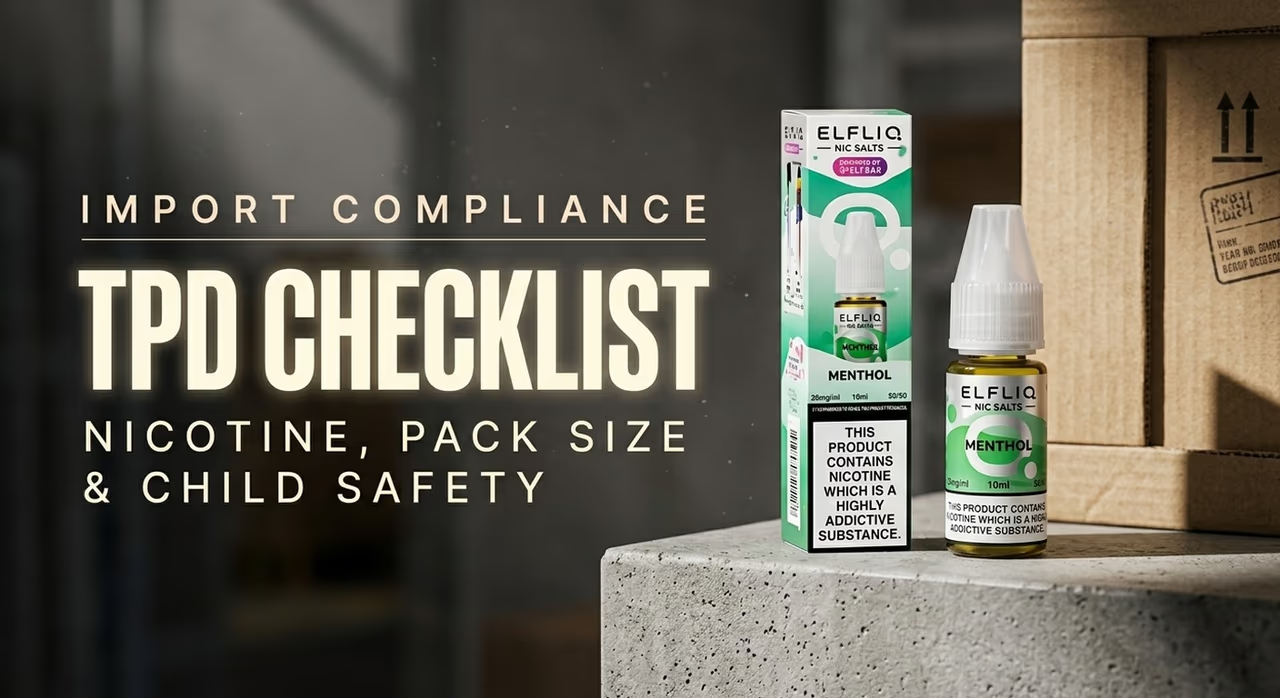
Imported nicotine e-liquids still have to meet the same Great Britain retail checks before they reach the shelf: 20mg/ml nicotine strength, 10ml refill-container size, 2ml tank or cartridge capacity where relevant, child-resistant and tamper-evident packaging, required labelling, and notification duties.
The practical importer question is not only "does the supplier say TPD-compliant?" It is whether your files can prove the exact SKU, strength, pack, notification route and responsible producer position.
For retailers, the safest workflow is a documented goods-in check before listing or shelfing, with a hold point for unclear imported stock.
Quick answer: before imported nicotine-containing e-liquids, refill containers, pods or devices are listed for sale in Great Britain, check the legal limits, packaging and notification evidence against official sources, not only against supplier sales copy.
This guide is for adult-facing UK importers, wholesalers and retailers who need a practical goods-in checklist. It covers nicotine concentration, container size, tank or cartridge capacity, child-resistant and tamper-evident packaging, labelling, ingredients, product notification and record keeping. It does not provide legal advice and it does not make safety or health-benefit claims.
The angle matters because imported stock can look compliant at a glance while still leaving gaps: a 20mg/ml label with an oversized refill bottle, a compliant-looking pod kit without clear notification evidence, packaging claims that do not match the unit pack, or supplier paperwork that does not identify the exact product variant.
Use this alongside our wider compliance cluster: UK vape laws in 2026, vape WEEE compliance and NI to GB vape movements and VPD checks.
What to check before imported liquids reach the shelf

Start with the official Great Britain consumer-product rules. GOV.UK guidance says e-cigarette tanks are restricted to no more than 2ml, nicotine-containing refill containers for sale are restricted to no more than 10ml, and e-liquids are restricted to a nicotine strength of no more than 20mg/ml. It also says nicotine-containing products or their packaging must be child-resistant and tamper-evident, with labelling requirements and warnings.
For imported stock, turn those limits into a receiving checklist. Do not accept "TPD-ready" or "UK-compliant" as a substitute for line-by-line evidence. Match the paperwork to the product name, flavour or variant, nicotine strength, bottle size, pack size, batch or lot reference where available, and the party responsible for placing the product on the market.
MHRA's retailer and producer advice is especially useful at goods-in stage because it states that the nicotine concentration and size-of-presentation requirements apply to products sold to end consumers, irrespective of whether the end consumer intends to modify the product.
Imported nicotine liquid and device shelfing checks
Nicotine strength, bottle size and pod capacity

The three numbers that should appear in every imported-liquid check are 20mg/ml, 10ml and 2ml.
- 20mg/ml: the maximum nicotine concentration for nicotine-containing e-liquid sold as a consumer product in Great Britain.
- 10ml: the maximum volume for a nicotine-containing refill container sold to end consumers.
- 2ml: the maximum capacity for e-cigarette tanks and for relevant consumer-sale cartridges or pods.
These are not buying-guide preferences. They are compliance thresholds described in GOV.UK and MHRA guidance. A retailer should therefore record the checks before stock is listed online, put into a display, or moved to branch inventory.
Imported products deserve extra care because packaging conventions differ by market. A product made for another country may use a larger bottle, different warning layout, different pack language or a device format that does not map neatly to the Great Britain shelf. Do not assume a supplier's UK-facing catalogue page proves every delivered variant matches the UK rules.
Child-resistant packaging is a file-check, not a slogan

GOV.UK guidance says nicotine-containing products or their packaging must be child-resistant and tamper-evident. Directive 2014/40/EU Article 20 sets the EU framework for electronic cigarettes and refill containers, including child- and tamper-resistant packaging and refill mechanisms designed to avoid leakage.
The practical mistake is treating "child-resistant" as a label phrase rather than a control. Importers and retailers should keep supplier declarations, packaging specifications or other evidence in the product file. Staff receiving stock should check the physical pack: seal intact, warning information present, bottle cap or unit-pack mechanism consistent with the file, and no obvious mismatch between sample paperwork and delivered stock.
A good compliance note is short but specific: "SKU checked on arrival against supplier pack file; unit pack sealed; nicotine strength and bottle size match invoice and specification; retained evidence in product folder." That kind of note is more useful than a generic "TPD checked" tick box.

Notification and producer responsibility
The Tobacco and Related Products Regulations 2016 require a producer who supplies or intends to supply electronic cigarettes or refill containers to notify the Secretary of State in accordance with the regulations. In practice, a retailer buying imported stock should know who the producer or importer is for the Great Britain market and keep evidence that the exact product line has been handled through the notification route.
This is where imported stock often becomes messy. A supplier may provide a brand-level statement, but the retailer needs variant-level confidence: flavour, strength, bottle or pod format, pack size and device configuration. If the evidence only covers a different strength or older pack, it should not be treated as evidence for the delivered SKU.
Retailers do not need to turn every buyer into a regulatory lawyer, but they do need a repeatable escalation path. If branch or ecommerce teams cannot match the product to a current compliance file, the stock should move to a hold queue rather than straight to sale.
- Record the supplier, importer and responsible producer details for each imported line.
- Match notification evidence to exact SKU, strength, flavour and pack format.
- Keep invoices, pack images, specifications and supplier declarations together.
- Review older imported listings when packaging or formulation changes.
- Escalate ambiguous documents to compliance or legal review before sale.
Ingredients, labels and claims to avoid

GOV.UK ingredient guidance links nicotine-containing liquids back to TRPR requirements and says producers must ensure that nicotine-containing liquid in electronic cigarettes and refill containers does not contain additives listed in Regulation 16 and, except for nicotine, only includes ingredients that do not pose a risk to human health in heated or unheated form.
For a retailer, the realistic check is not laboratory verification. It is documentary discipline. Make sure the supplier's product file covers ingredients and formulation; watch for claims about vitamins, caffeine, taurine, colourings or other features that official guidance flags; and avoid adding marketing copy that turns a compliance check into a health or lifestyle claim.
Be especially careful with imported flavour and packaging descriptions. Adult product information can say what the flavour family is in plain language. It should not lean into sweet-shop language, youth-coded imagery, cartoon-like presentation or unsupported claims about being clean, safe, healthy or risk-free.
A practical imported-stock workflow
The strongest workflow is boring by design. It gives buying, goods-in, ecommerce and store teams the same stop/go rules.
- Create a product file before ordering: supplier, importer, producer, exact SKU, source documents and intended sales channel.
- Check the legal thresholds: 20mg/ml nicotine, 10ml refill container, 2ml tank or cartridge where relevant.
- Check packaging: child-resistant and tamper-evident evidence, warning information, pack language and visible mismatch against the file.
- Check notification evidence: product name, strength, flavour, pack and device format match the delivered line.
- Check ingredients and claims: no banned-additive red flags, no health-benefit wording, no youth-coded descriptors.
- Put unclear stock on hold: do not list, display or transfer it to stores until the evidence gap is closed.
- Keep the audit trail: date checked, person checking, documents retained, decision made and next review trigger.
This also protects ecommerce teams. If a product is not cleared at goods-in, the product page should not go live with placeholder copy. If it is cleared, the page should use factual specifications and neutral service information, not promotional claims that imply the product is safer, healthier or suitable for non-smokers.
How this sits beside 2025 and 2026 rule changes
Imported-liquid checks do not sit alone. GOV.UK says the ban on selling or supplying single-use vapes came into force on 1 June 2025. The Tobacco and Vapes Act 2026 is now on legislation.gov.uk and sits beside existing product standards, notification duties and future powers.
For retailers, that means a compliant imported nicotine liquid file is only one part of the control stack. The same business may also need WEEE and battery handling, Vaping Products Duty preparation, age-of-sale controls, advertising-rule review and future licensing readiness. Keep those workstreams separate in the file so one passed check does not imply everything else is cleared.
Related reading for the wider stack: vape WEEE compliance for producers and retailers, UK vape laws in 2026 and NI to GB vape movements and VPD checks.
FAQ
What is the maximum nicotine strength for e-liquid sold in Great Britain?
GOV.UK and MHRA retailer guidance describe a maximum nicotine concentration of 20mg/ml for nicotine-containing e-liquid sold as a consumer product.
Can a nicotine refill bottle be larger than 10ml if it is imported?
Imported status does not remove the Great Britain consumer-sale size check. GOV.UK and MHRA retailer guidance describe a 10ml maximum for nicotine-containing refill containers sold to end consumers.
Who should keep the product-notification evidence?
The producer has notification duties, but retailers and importers should retain enough supplier and product-file evidence to show why the exact SKU was accepted for sale.
Does child-resistant packaging mean the product is safe?
No. Child-resistant and tamper-evident packaging is a product and packaging requirement. It should not be turned into a safety or health-benefit claim in retail copy.
Is this legal advice?
No. This is an editorial checklist based on official public sources. Importers and retailers should use official guidance and get legal or compliance advice for borderline stock.
Source references
- GOV.UK: E-cigarettes: regulations for consumer products
- GOV.UK / MHRA: E-cigarette and vape advice for retailers and producers
- Legislation.gov.uk: Tobacco and Related Products Regulations 2016, Part 6
- EUR-Lex: Directive 2014/40/EU, Article 20
- GOV.UK: Chapter 6 ingredient guidance for nicotine-containing liquids
- GOV.UK: Single-use vapes ban: information for businesses
- Legislation.gov.uk: Tobacco and Vapes Act 2026