Disposable Vape Ban UK: What Changed After 1 June 2025
Single-use vapes are now banned for sale and supply across the UK. Here is the plain-English post-ban guide for adult buyers and retailers.
From 1 June 2025, UK businesses cannot sell, supply, offer to sell or stock single-use vapes for sale. Reusable vapes remain legal for adults where the device is rechargeable, refillable and, where it has a coil, the coil is removable and replaceable. Puff count alone does not prove legality. Flavour, packaging, display and advertising controls are a separate 2026-27 policy track, not the same thing as the disposable-vape ban.
The UK disposable vape ban is no longer a future proposal. It is now in force.
Since 1 June 2025, businesses in the UK have been banned from selling or supplying single-use vapes. The official GOV.UK guidance on the single-use vapes ban also says businesses must not offer them for sale or stock them where they plan to sell or supply them. The rule applies online and in shops, and it covers products whether or not they contain nicotine.
For adult vapers, the practical answer is simple but easy to misread: disposable vapes are banned from sale, but vaping itself has not been banned. Reusable vape products can still be sold to adults where they meet the legal definition and the wider UK product rules still apply.
That distinction matters because the market has changed quickly. Some products now look like the old disposable format but use rechargeable batteries and replaceable pods or refill containers. Others may use large puff-count marketing that tells you very little about whether the product is actually legal. The useful question after the ban is not "how many puffs does it claim?" It is "can this product be reused in the way the law requires?" For that same puff-count issue, see our 30,000-puff vapes UK legality guide.
This refresh replaces the old pre-ban article with a current post-ban guide. It separates confirmed law from future policy, explains the reusable-device test in plain English, and gives adult buyers and retailers a clean checklist without encouraging anyone to look for banned products.
Table of Contents
What changed on 1 June 2025

The main change is that single-use vapes can no longer be sold or supplied by businesses in the UK. GOV.UK describes single-use vapes as products that are not designed or intended for reuse, and says the ban covers sales in shops and online. The guidance is explicit that businesses must arrange to recycle leftover stock of single-use vapes and that reusable vapes can still be sold and supplied.
The ban is UK-wide in practical retail terms, although enforcement details vary by nation. In England, Trading Standards leads enforcement and GOV.UK lists civil sanctions such as stop notices, compliance notices and a GBP200 fine in the first instance, with seizure of single-use vapes. Continued breaches can lead to more serious penalties. Wales, Scotland and Northern Ireland have their own enforcement routes and penalty details, so retailers should check the current guidance for where they trade.
For a customer, the headline is narrower. The ban does not make it illegal for adults to buy every vape product. It removes the single-use category from lawful business supply. A rechargeable, refillable product with separately available refills or pods may still be legal, provided it also meets the wider product requirements for vaping products.
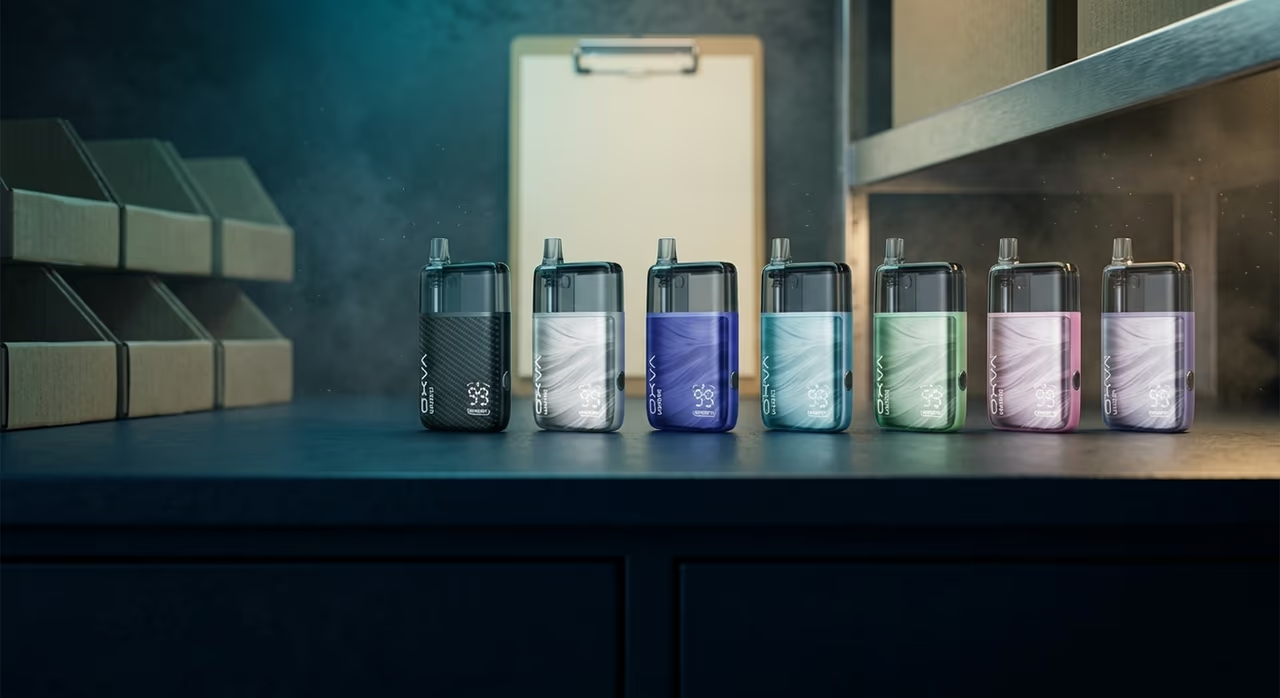
That is why the post-ban shelf looks different from the 2024 shelf. The old sealed disposable bar is out. Refillable pod kits, open-system kits, rechargeable closed-pod kits and compliant replaceable-pod systems can still exist in the adult market.
What counts as reusable after the ban

GOV.UK gives a practical test. To be reusable, a vape must have a rechargeable battery, a refillable container that holds the e-liquid, and a removable and replaceable coil if the product contains a coil.
The refill part can work in more than one way. Some products are refilled by adding e-liquid to a tank or cartridge. Others are refilled by inserting separately available prefilled pods. The point is that the user should be able to buy the refill items separately and keep using the device, rather than throwing the whole thing away when the first liquid supply is finished.
The coil point is also important. If the device contains a coil, the coil must be removable and replaceable by the vape user. In many pod systems the coil is built into the removable pod or cartridge, so replacing the pod replaces the coil. That can fit the reusable definition where the rest of the product also satisfies the rule.
This is where puff-count claims can mislead. A product marketed with a high puff number is not automatically legal. A rechargeable battery is not enough on its own. A replaceable pod is not enough on its own. The product needs to meet the reusable test as a whole.
Adult buyers should look for three things before trusting a post-ban listing:
- Rechargeability: the device has a battery that can be recharged.
- Refill route: the liquid container can be refilled or replaced with separately available refill pods or bottles.
- Coil replacement: where the device has a coil, the coil can be replaced directly or through a removable pod or cartridge.
If the listing is vague, treat that as a warning sign. A responsible retailer should be able to explain how the product is reused, where the replacement pods or refills are available, and why the device is not a single-use vape.
What the ban does not change
The disposable ban sits beside the wider UK vape rules. It does not replace them.
The MHRA's consumer-product guidance still explains core requirements for nicotine-containing e-cigarettes and refill containers. These include a 2ml maximum tank capacity, a 10ml maximum for nicotine-containing refill containers, a nicotine strength limit of 20mg/ml, child-resistant and tamper-evident packaging requirements, labelling rules, and MHRA notification before products can be sold.
That means a product can pass the reusable test and still fail another UK requirement. For example, a refillable or pod-based product still needs to comply with the nicotine strength, container, notification and labelling rules that apply to its category.
The ban also does not settle the future rules on flavours, packaging, displays or advertising. Those are related politically, but they are not the same legal change. The Department of Health and Social Care says the Tobacco and Vapes Act 2026 received Royal Assent on 29 April 2026, and that the government intends to bring a comprehensive ban on advertising and sponsorship of vaping and nicotine products into force from 1 June 2027. Product, packaging, display and flavour controls may also be developed through secondary legislation and guidance. For the wider Act context, see our UK vape laws 2026 explainer.
So the clean wording is: single-use vape sales and supply are already banned; future restrictions on advertising, sponsorship, packaging, displays and flavour presentation should be tracked separately as they are commenced or consulted on. Do not tell readers that all flavours are already banned unless a current primary source says so.

Adult buyer checks after the ban
If you are an adult who already vapes, the safest buying habit is to check the format before the flavour. That sounds boring, but it is the difference between buying a reusable product and accidentally chasing something that should not be on sale.
Start with the product type. Is it a refillable pod kit, an open tank kit, or a rechargeable device with separately available prefilled pods? Can you see replacement pods, coils or e-liquid refills sold separately by the same retailer or widely available from other UK retailers?
Then check the regulatory basics. Nicotine e-liquid should not be above 20mg/ml. Tanks and pods for nicotine-containing e-liquid should be in the UK-compliant size range. The product should not be presented as a medicine or a guaranteed way to quit unless it is specifically licensed and the claim is properly supported.
Be careful with listings that lean heavily on old disposable language. "Thousands of puffs" is a marketing claim, not a compliance certificate. "Rechargeable disposable" is also a phrase that deserves scrutiny. A product that can be charged but cannot be refilled, or cannot have its liquid container replaced with separately available refills, may still fall on the wrong side of the ban.
For more detail on the adult-buyer landscape, link this guide to our post-ban buying explainer: From Single-Use Bans to Vaping Duty: What UK Adult Vapers Need to Know Before Buying. For the refillable point, use Will Refillable Vapes Be Banned?.
Retailer checks after the ban

Retailers need a stricter version of the same check because the legal risk sits with businesses that sell, supply, offer, or stock single-use vapes for sale.
The first job is stock control. Any leftover single-use vape stock should be separated from saleable goods, labelled as unsellable and removed from the shop floor or online store while it is awaiting collection by a registered vape recycling route. GOV.UK says businesses must arrange to recycle leftover stock and warns that commercial loss and enforcement action are risks if leftover stock is not handled responsibly.
The second job is supplier evidence. GOV.UK says businesses must be able to provide evidence that a product is legal and reusable, and show the steps they took to check. That makes supplier files more important than they used to be. Keep product specifications, supplier declarations, refill availability evidence, invoices and any correspondence that explains how the product meets the reusable definition.
The third job is staff wording. Staff should not tell customers that a product is legal simply because it has a large puff count or a USB port. The better line is factual: this product is rechargeable, uses separately available refill pods or e-liquid, and has a replaceable coil route where applicable. If staff are unsure, the product should be escalated internally before it is sold.
Retailers should also avoid using the disposable ban as a promotional hook. "Banned disposable replacement" copy can drift into exactly the kind of youth-coded, urgency-led marketing that regulators are trying to move the market away from. Keep customer-facing copy sober, adult and factual. For marketing controls, use our UK vape marketing audit checklist.
FAQ
What this means for UK buyers
The disposable vape ban has shifted the UK market from throwaway products toward reusable formats, but it has not removed the need for careful buying. The best adult-vaper check is now practical: can the device be recharged, refilled or repodded, and kept in use with separately available parts?
If the answer is clear, you are looking at the right kind of post-ban question. If the answer depends on a puff-count claim, vague product copy or "disposable-style" wording, slow down and check the product against the official reusable definition before buying.
Source list
- GOV.UK: Single-use vapes ban: information for businesses
- Legislation.gov.uk: The Environmental Protection (Single-use Vapes) (England) Regulations 2024 draft instrument
- GOV.UK / MHRA: E-cigarettes: regulations for consumer products
- Department of Health and Social Care Media Centre: Ending the advertising and sponsorship of vaping and nicotine products from 1 June 2027
- ASA/CAP: CAP Code Section 22: Electronic cigarettes