Vape Website Product Information After 2027: Factual Copy vs Promotion
DHSC says retail websites should still be able to provide factual product information after the 2027 vape advertising restrictions. This guide explains the practical copy boundary without giving legal advice.
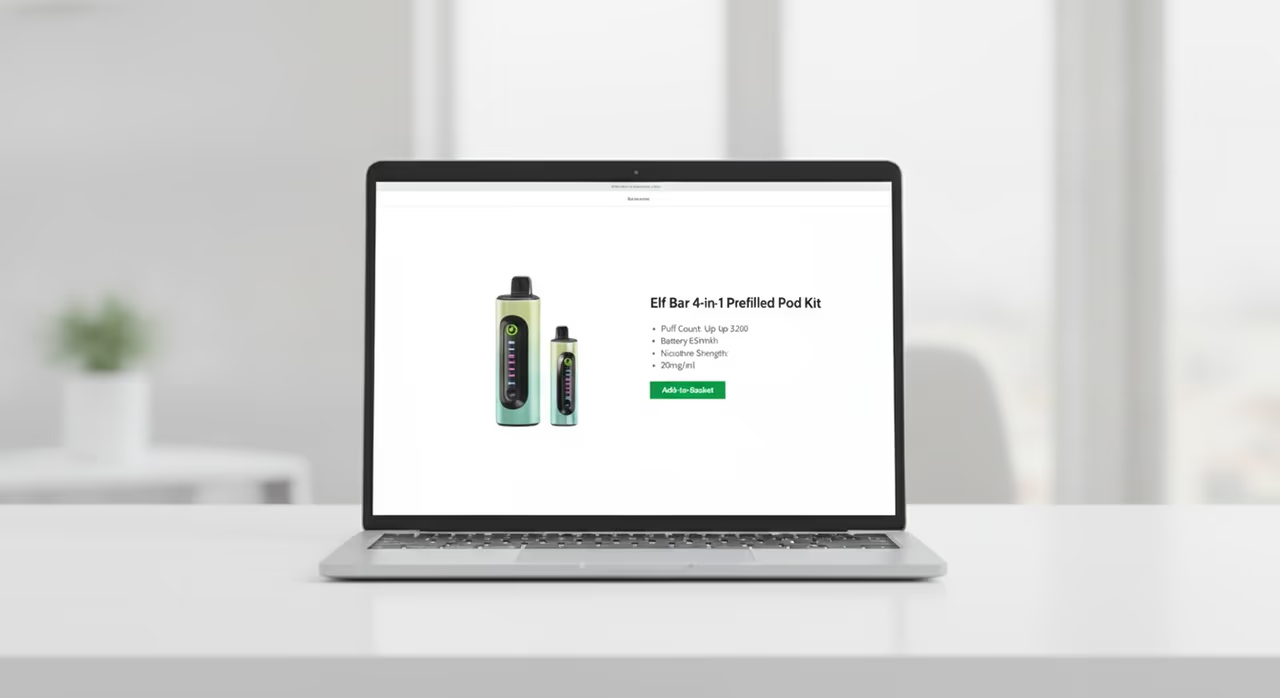
DHSC says retail websites should still be able to provide factual information about vaping and nicotine products after the intended 1 June 2027 advertising and sponsorship restrictions.
The risky boundary is copy that does more than inform: urgency, lifestyle appeal, discount-led nudges, creator-style hype, youth-coded tone or wording designed to encourage a purchase.
Current ASA/CAP guidance already treats factual claims on a marketer's own website differently from paid online ads, public social posts and promotional email.
Retailers should build a product-page copy register now, separating specifications, compatibility and statutory information from promotional claims and unclear content.
This is a practical editorial guide, not legal advice. Businesses should watch DHSC, ASA/CAP and Ofcom updates before finalising a 2027 policy.
The useful question for UK vape retailers is not only "when does the advertising ban start?" That has already been covered in our related reading on the 1 June 2027 nicotine marketing date. The narrower question is more practical: when vape advertising and sponsorship restrictions tighten, what can a retail website still say about the products it sells?
The answer starts with a careful distinction. DHSC says retail websites will still be able to provide factual information about products they sell. It also says content designed to encourage or promote the purchase of vaping or nicotine products may be captured by the restrictions.
That is not a finished rulebook. Guidance and secondary legislation still matter. But it is enough to give adult-focused retailers a better preparation job than simply deleting every product page or leaving promotional copy untouched.
This guide focuses on ecommerce copy: product pages, category pages, comparison text, stock notices, email-like website modules and retailer-owned information pages. It does not replace legal advice, and it does not try to relitigate the broader 1 June 2027 commencement date.
Why this is a distinct 2027 problem
The published commencement update explains the working date and the operator transition window. This article is deliberately narrower. It deals with the line between product information and product promotion on retail websites.
That line matters because adult shoppers still need basic information. They need to know whether a product is refillable or prefilled, what nicotine strength is listed, which pod fits which device, what is included in the box, whether a charger is supplied, how age checks work, and what recycling or returns information applies.
At the same time, a product page can drift from information into promotion quickly. A factual line such as "2ml pod, 20mg/ml nicotine salt, compatible with X device" is doing a different job from "the ultimate flavour hit you need today" or "buy now before everyone switches."
The 2027 preparation task is therefore not "remove information". It is "make the purpose of each line obvious". If the purpose is customer service, compatibility, compliance or stock clarity, keep it factual. If the purpose is demand creation, treat it as marketing and review it against the new restrictions.
What official sources say so far

DHSC's 1 June 2026 implementation note says the Tobacco and Vapes Act received Royal Assent on 29 April 2026 and that the government intends the advertising and sponsorship restrictions for vaping and nicotine products to come into force across the UK from 1 June 2027.
For website operators, the most important passage is DHSC's own distinction between factual information and purchase-promoting content. DHSC says retail websites will still be able to provide factual product information, while content designed to encourage or promote the purchase of these products may be captured by the advertising restrictions.
Current ASA/CAP guidance points in the same practical direction even before 2027. CAP Code rule 22.12 restricts marketing communications with the direct or indirect effect of promoting unlicensed nicotine-containing e-cigarettes and components in newspapers, magazines, periodicals, online media and some other electronic media, except for trade-only media. The same rule notes that factual claims about products are permitted on marketers' own websites and, in certain circumstances, other non-paid-for online space under the marketer's control.
ASA/CAP's media-prohibitions advice gives examples of why this boundary is not cosmetic. It says there is scope for unlicensed nicotine-containing e-cigarette ads on a marketer's own website where claims are factual rather than promotional, but cites rulings where flavour-heavy or discount-style language went beyond factual information.
Factual copy vs promotional copy
Vape website copy checks before 2027
The table is not a legal safe list. It is a drafting discipline. Retailers should ask what each sentence is doing. Is it helping an adult customer understand the product, or is it trying to increase desire and urgency?
Good factual copy usually has a source: the product specification, the packaging, the notified product record, the user manual, the retailer's service policy or an official compliance source. Promotional copy often has a different feel: superlatives, emotional claims, urgency, entertainment language, youth-coded references or broad lifestyle promises.
The line is especially important on category pages and "best" articles. A product page may be able to state neutral compatibility information. A category page that frames a nicotine product as exciting, essential or trend-led may be doing a promotional job even when it contains accurate facts.
Website pages that need the closest review


Start with pages where promotional wording tends to accumulate over time.
- Product pages: check names, flavour descriptions, specification tables, badges, bundle text and stock modules.
- Category pages: review intros, ranking copy, buying-guide claims and any copy that implies social status, excitement or lifestyle benefit.
- Homepage modules: remove nicotine-product demand nudges from promotional panels unless legal review has cleared the exact use.
- Search and filter pages: check labels such as bestsellers, trending, hot picks or limited offers.
- Email capture and loyalty pages: separate service messages from purchase-promotion language.
- Blog and comparison content: make sure informational guides are not simply sales pages with paragraphs around them.
Retailers should also check reusable fragments. A single promotional badge, banner or stock module can appear across hundreds of pages. If the same component says "get yours now" beside nicotine-containing products, the issue is not only one product page.
What to do in the next 30 days
- Export all product, category and guide URLs that mention vaping products, nicotine products, pods, e-liquids or related accessories.
- Add columns for page owner, content purpose, product type, nicotine status, last review date and whether the page contains promotional language.
- Mark content as factual, promotional or unclear. Do not force borderline copy into the factual bucket just to finish the spreadsheet.
- Remove or rewrite obvious hype: urgency, lifestyle claims, youth-coded phrasing, discount pressure and unsupported superlatives.
- Keep useful adult information: specifications, compatibility, age-check process, returns, recycling, stock status and safety warnings where supported by official or product sources.
- Put unclear pages into legal or compliance review, especially where affiliate, creator, sponsorship or paid-media mechanics are involved.
- Watch for DHSC guidance, secondary legislation, ASA/CAP consultation and Ofcom-related code updates before finalising the 2027 website policy.
The goal is a reviewable evidence trail. A future Editor, compliance lead or regulator should be able to see that the retailer identified the purpose of each content type and acted before the intended 1 June 2027 start date.
Where social, email and paid ads differ

Do not assume that a line acceptable on a retailer-owned product page can be copied into a public social post, paid search ad, display banner or promotional email.
ASA/CAP's current media-prohibitions advice says online media and some other electronic media are likely to include paid display ads, paid search listings, paid social placements, commercial messaging, promotional marketing online and marketers' activities online except for permitted activities described in the guidance.
The guidance also draws a practical distinction between retailer-owned website-like spaces and public social content. It says a public social account can distribute content beyond people actively seeking it, which can make it unlike a retailer's own website.
For retailers, that means the website audit should not be a copy-and-paste library for every channel. Build separate rules for product pages, email, paid media, public social, affiliate copy and private customer-service replies. The more a message is pushed at people, paid for, sponsored or distributed beyond a controlled information space, the more cautious the review should be.
Internal links to keep the cluster clean
Use the existing canonical article for the date itself: 1 June 2027 nicotine marketing date: operator transition update.
For channel-level advertising rules, use UK vape advertising and social-media rules. For a wider internal control workflow, use UK Vape Marketing Audit Checklist for 2026. For broader statutory context, keep UK vape laws in 2026 beside the register.
This keeps the search intent split clean. The commencement article answers "what date changed?" This article answers "what can a vape retail website say?" The audit guide answers "how do we control the whole marketing process?"
FAQ
Bottom line
The strongest preparation is not a panic deletion exercise. Adult customers will still need factual information to understand products, compatibility and service terms. Retailers will still need clear pages for age checks, returns, recycling and stock status.
The risk sits in copy that is trying to sell, excite, hurry or glamorise rather than inform. Start with the pages that mix specifications with hype, then build a register that records which content is factual, promotional or unclear.
The 1 June 2027 date gives retailers time to make that distinction properly. Use it to make website copy plainer, more sourceable and easier to defend when DHSC, ASA/CAP and Ofcom publish the next round of guidance.
Source references
- DHSC Media Centre: Ending the advertising and sponsorship of vaping and nicotine products from 1 June 2027
- legislation.gov.uk: Tobacco and Vapes Act 2026
- ASA/CAP: CAP Code Section 22: Electronic cigarettes
- ASA/CAP: Electronic cigarettes: Media prohibitions
- GOV.UK: Tobacco and Vapes Bill becomes law