World Vape Show Dubai 2026: UK retailer claim checks
A UK retailer lens on World Vape Show Dubai: how to spot the next product claims and verify them before you list or promote anything.
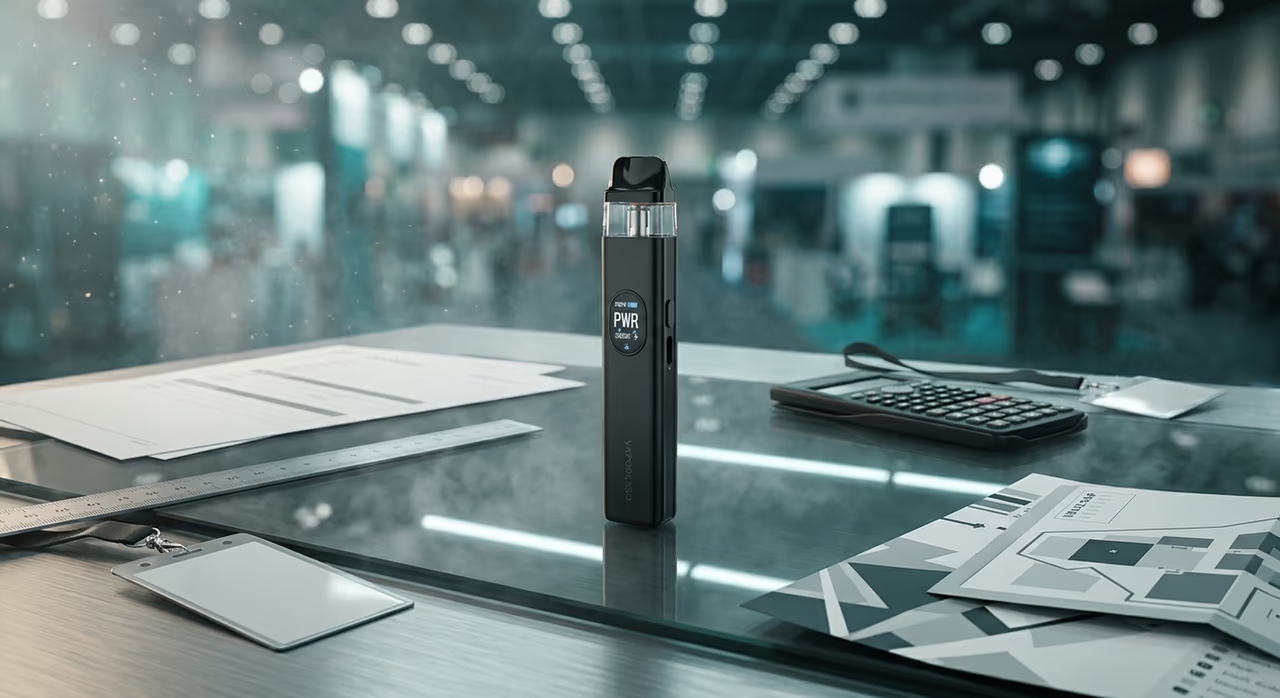
World Vape Show Dubai is a useful trend-watch lens for UK vape retailers, but it is not a rulebook. The show is where brands launch devices, packaging cues and selling angles; the UK buyer still has to check whether those claims survive domestic rules on e-liquid strength, tank capacity, notification and advertising.
The practical move for retailers is to use the expo to spot what is coming next, then verify every product claim against MHRA, GOV.UK and ASA sources before listing or promoting anything in the UK.
World Vape Show Dubai is useful not as an event recap but as an early warning on the product claims UK retailers are likely to see next. The sensible editorial move is to treat the expo as a lead list, then verify every claim against GOV.UK, MHRA, ASA and legislation.gov.uk before it appears in a UK-facing listing, social post or buying guide.
That matters because trade-show language often skips the detail that controls whether a claim can survive in the UK. A feature can sound routine on a stand and still fail in a UK catalogue if it conflicts with tank capacity, nicotine limits, notification or ad rules. Use the show to spot what is coming next, then check it against domestic rules before you repeat it.
Why the Dubai show matters to UK retail
World Vape Show Dubai describes itself as a B2B exhibition and conference for the international vape industry. That framing is the key to its value for UK operators: you are not there to find consumer advice, you are there to see what manufacturers and distributors are choosing to present as the next commercial story.
For a UK retailer, that is useful for three reasons. First, it helps you see which format is gaining momentum: refillable pod kits, high-capacity devices, accessory-heavy systems or flavour-led lines. Second, it gives you an early look at the claims brands like to repeat. Third, it creates a shopping list of product pages, notification checks and supplier questions you need to run before anything goes live in your own store.
The risk is that trade-show language often skips the bit that matters in the UK: whether the product claim is actually compatible with local consumer rules. A booth may talk about convenience, better flavour or better value, but a UK catalogue needs much more than that. It needs the exact tank capacity, the nicotine strength, the refill container size, the notification status where applicable and a sensible ad tone. If you are turning a new format into buyer guidance, the first pod kit onboarding guide is a useful companion read.
- Use the show for discovery: collect names, formats, spec sheets and claims that keep reappearing.
- Use the UK rule set for filtering: only publish what fits domestic product and advertising rules.
- Use retailer discipline for the final step: if the claim cannot be verified, do not echo it.
What claims should be checked first

The first claim to check is capacity. GOV.UK guidance for consumer products says e-cigarette tanks and cartridges must not exceed 2ml, and nicotine-containing refill containers must not exceed 10ml. That immediately separates a compliant UK-facing product page from a generic expo headline that may be describing a different market.
The second claim is nicotine strength. The consumer-product guidance also sets the maximum nicotine concentration at 20mg/ml. A trade-show brochure might say a device is designed for "stronger" liquids or "high delivery", but the UK listing still has to work within the nicotine limit and avoid implying the liquid can do something it cannot.
The third claim is notification. The MHRA e-cigarette search is the official place to check published products. That matters because some brands are comfortable describing a product as "available globally" or "ready for launch" long before it is on the UK publication list. For a UK retailer, that gap is where a lot of avoidable compliance risk sits.
The fourth claim is advertising tone. ASA guidance on electronic cigarettes says ads should be socially responsible, not appeal to children, and should not make medicinal claims or mislead about ingredients or usage. For a retailer, that means the copy you write after a show should be plain and checkable. Do not turn a feature demo into a health promise or a lifestyle cue that reads young.
In practical terms, the review order should be: product dimensions, liquid capacity, nicotine strength, notification status, then ad-copy wording. If a product survives those four checks, it is far easier to build a proper listing, spec table and buying guide entry around it.
How to turn expo intelligence into a UK checklist
The easiest mistake is to treat a trade show as content by itself. It is not. It is a source stream. The content comes after the stream has been tested against UK rules and your own editorial standards.
For a retailer, that means building a simple repeatable process after each major event. Capture the product name and the exact claim. Find the official product page, then the retailer page, then the MHRA and ASA checks. If the product is not clearly within the rules, write the product up as "under review" or do not write it up at all.

This approach is more credible than a fast-post reaction because it avoids the common traps: copying a manufacturer line verbatim, repeating a claim that only works in another market, or publishing a "trend" article that reads like a sales brochure. Adult UK readers do not need hype. They need the sequence of checks that tells them what matters.
- Capture the exact claim and the market it was made for.
- Check the UK capacity and nicotine limits.
- Confirm notification status where the product contains nicotine.
- Review the ad wording against ASA guidance.
- Only then decide whether the product deserves a live listing, a draft, or a watchlist note.
The single-use ban is part of that context too. Legislation.gov.uk shows the single-use vapes regulations that came into force on 1 June 2025 in England, which changed what retailers can comfortably carry and what consumers expect to find. Expo coverage that ignores that shift tends to miss the commercial point: more of the business is now about reusable, compliant alternatives and the claims that help sell them responsibly, which is why the single-use-ban buying guide matters here.
A UK retailer's claim review template

When a product turns up in your inbox after a show, check it against a short internal template rather than improvising. That keeps your catalogue, buying guide and social posts aligned.
- Product form: Is it a kit, a device-only item, a refill container or a fixed-combination product?
- Capacity: Does the visible UK specification stay at or below 2ml for tanks/cartridges and 10ml for refill containers?
- Nicotine limit: If it is a nicotine liquid, is the concentration no more than 20mg/ml?
- Notification: Is there a published MHRA record for the nicotine-containing product?
- Ad copy: Does the wording stay factual, adult, and free of medicinal or youth-appeal cues?
- Proof: Are the claims tied to an official page, guidance page or retailer listing, not just a booth slogan or social post?
This is also where you protect your own editorial credibility. A retailer site that repeats every expo claim verbatim will eventually publish something inconsistent or non-compliant. A site that verifies first will look slower on launch day, but stronger over time.
What to link, and what to avoid
For source references, use the event page for the market context, then primary UK sources for the rules. The World Vape Show page gives the industry framing. GOV.UK and MHRA give the consumer-product checks. ASA gives the ad rules. Legislation.gov.uk gives the legal backbone for the single-use ban.
Do not rely on vape-publisher summaries for the regulatory bits. Those can be useful for topic discovery, but they are not the right place to anchor a claim about what a retailer may list or how an ad should be phrased. If the article mentions compliance, the primary source should do the heavy lifting.
That separation of roles keeps the article honest. Expo source for the "what is being discussed", primary source for the "what is allowed", and retailer source for "what is actually stocked".
What this means for UK retailers
World Vape Show Dubai is useful when it helps a UK retailer ask better questions before a product page goes live. The show can point to formats and claims that may arrive in supplier catalogues next, but it should not set the wording for a UK-facing listing.
The practical next step is to keep a short verification record for each expo-led product: official source, UK capacity and nicotine checks, MHRA publication check where relevant, and ASA-safe ad wording. If those checks are not clear, keep the item on a watchlist rather than turning a trade-show claim into consumer-facing copy.