NHS Inpatient Vape Rules After the Single-Use Ban
NHS vape rules now vary by trust and ward. Here is what adult patients should ask about rechargeable devices, storage and charging before admission.
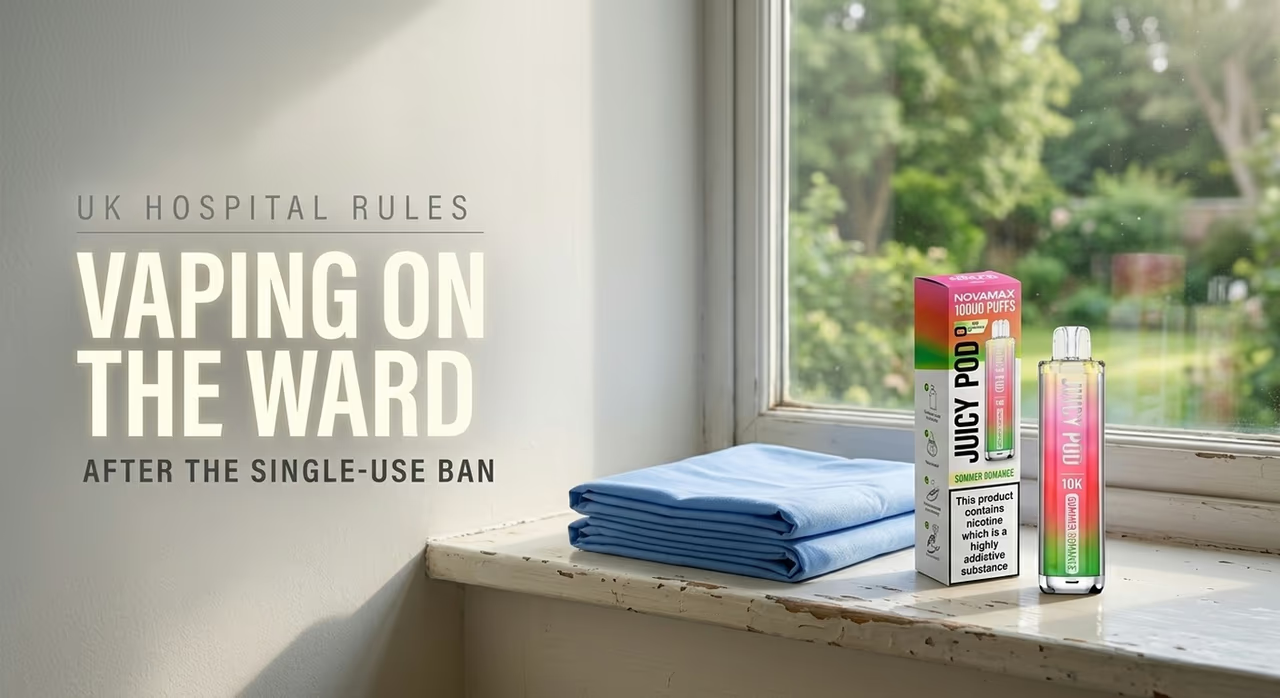
NHS inpatient vape rules are becoming more device-specific after the UK single-use vape controls. Some trusts now point patients toward rechargeable or trust-approved closed-pod devices; others restrict vaping to outside areas or ban e-cigarette use and charging on site.
For adult patients, the useful question is not "can I vape in hospital?" It is "what does this ward allow, where can it be used, who stores it, and who may charge it?"
This is a policy explainer, not medical advice. Always follow the ward team's instructions and ask for stop-smoking or nicotine-dependence support if you need it during admission.
If you are admitted to an NHS ward and you vape, do not assume the same rules apply everywhere. After the UK ban on supplying single-use vapes took effect on 1 June 2025, some trusts have rewritten patient guidance around rechargeable devices, closed pods, storage and charging. For the wider retail-law context, see our UK vape laws 2026 guide. The result is a patchwork of local rules that matters before you pack for hospital.
Oxford Health's inpatient guidance shows the shift clearly. It says that on inpatient wards where vaping is permitted, rechargeable vapes are now the only vape format allowed on site, with different handling rules for forensic and secondary mental health patients. That is not a national permission to vape on every ward. It is one trust's practical answer to the single-use controls.
The safest adult-reader takeaway is simple: check the specific trust and ward before admission. A rechargeable device may be acceptable in one mental health setting, allowed only outdoors in another, or not permitted at all in a smoke-free acute hospital site.
What has changed since the single-use vape ban

GOV.UK's single-use vape guidance says it is illegal for businesses and organisations to sell or supply single-use vapes, offer them for supply, or stock them for supply. The guidance also says the ban applies to businesses and organisations that supply single-use vapes, including healthcare settings and stop smoking services.
The same guidance defines the practical replacement category. To be reusable, a vape must have a rechargeable battery, a refillable container such as a chamber, cartridge, pod or tank, and a removable and replaceable coil where a coil is present. Refill items should be separately available.
That matters on wards because older inpatient vape policies often used disposables to avoid charging and device-handling risks. Once single-use supply became illegal, trusts that still allow vaping had to think about rechargeable devices, pod supply, storage, charging, fire safety, ligature risk and where use is permitted. For the waste and battery angle outside hospitals, see our rechargeable vape waste audit.
Oxford Health's page was last reviewed on 23 May 2025 and states that rechargeable vapes are the only form of vape allowed on permitted inpatient wards from 1 June. It also separates ward handling: forensic patients can buy pods through named routes and may use vapes in gardens and bedrooms under stated conditions, while secondary mental health patients receive up to two pods per day, charging is handled by nursing staff, and use is outside only.
Mersey Care's smoke-free page takes a similar but not identical route. It says the trust will offer inpatients advice on trust-approved vapes and permits rechargeable closed-pod vapes in single occupancy bedrooms and outdoor spaces, while cigarettes, lighters, matches and disposable vapes are not permitted on trust premises.
What adult patients should ask before admission

The pre-admission checklist should be specific. A generic search result about NHS smoking rules is not enough, because ward policy depends on trust, site, patient group and clinical risk.
- Ask whether vaping is allowed at all: some hospitals prohibit e-cigarette use and charging across buildings, grounds and hospital transport.
- Ask which device types are allowed: a trust may require rechargeable closed-pod or trust-approved devices, not any rechargeable vape bought elsewhere.
- Ask where use is permitted: rules may distinguish bedrooms, single occupancy rooms, gardens, outside grounds, courtyards or no hospital area at all.
- Ask who stores the device and pods: wards may keep tobacco products, lighters or non-approved products safely stored until discharge.
- Ask who charges the device: some trusts put charging in staff hands; others prohibit on-site charging unless approved through local risk assessment.
- Ask what support is available: wards may offer nicotine replacement therapy, tobacco-dependence advice or referral to stop-smoking support.
South West Yorkshire Partnership NHS Foundation Trust gives a useful example of this patient-facing language. Its smokefree page says inpatients can continue to use trust-approved e-cigarettes in hospital buildings and grounds, but people should speak to their healthcare team about where they can use one and which types are allowed. It also tells patients to speak to the team before buying a local-shop device so storage and approval can be discussed.
That is the tone patients should expect: not a retail-style recommendation, but a ward-management conversation. The question is what the care team can safely manage in that setting.
Why trust rules are not all the same

There is no single public-facing rule that says every NHS ward must allow or ban vaping in the same way. Trusts are balancing smoke-free estates, tobacco-dependence support, patient safety, fire risk, security, mental health ward realities and environmental rules.
That is why the examples differ. Oxford Health allows rechargeable devices only where vaping is permitted and then sets different use and charging rules by patient group. Mersey Care permits rechargeable closed-pod vapes in single occupancy bedrooms and outdoor spaces. South West Yorkshire asks patients to use trust-approved devices and check local details with the healthcare team.
Other trusts take a tighter line. University College London Hospitals says smoking is not permitted in hospitals, grounds or hospital transport, and also says e-cigarette use and charging are not permitted in those places because of fire and safety hazards. West Suffolk's policy says people are responsible for storage and charging of their own devices, but that vapes should not be charged on trust premises unless approved by a manager with portable appliance testing and risk assessment.
Those differences are not a contradiction so much as local risk management. A mental health inpatient unit, an acute surgical ward, a forensic service and a hospital entrance are not the same environment.
Examples of NHS vape-rule differences after single-use controls
Rechargeable does not mean charge-anywhere
The post-disposable move creates a practical tension. Reusable vapes are defined partly by rechargeability, but hospitals are careful environments for lithium batteries, chargers, cables and unsupervised electrical items.
West Suffolk's policy is plain on this point: individuals are responsible for storage and charging of their own vaping devices, safety advice is treated in line with other rechargeable lithium-battery electronics, and charging on premises should not happen unless a manager has approved it with the right testing and risk assessment. Oxford Health's secondary mental health guidance says charging will be carried out by nursing staff.
For patients, the practical rule is to separate ownership from control. You may own the device, but the ward may control whether it can be used, where it can be stored, who can access it and how it can be charged.
- Bring only what the ward says is allowed.
- Do not bring spare unlabelled chargers or damaged cables.
- Do not charge a vape in a room, bathroom, corridor or communal area unless staff have explicitly allowed it.
- Do not share devices or pods with other patients.
- Keep pods and liquids away from children, visitors and anyone for whom they are not intended.
This is not medical advice or a quit-smoking claim
Vaping policies in hospitals often sit next to stop-smoking support because nicotine withdrawal can be hard during an inpatient stay. But a ward vape policy is not the same as medical advice for an individual patient, and a consumer vape is not automatically a licensed medicine.
GOV.UK/MHRA guidance says the MHRA is the competent authority for the notification scheme for nicotine-containing vaping products. It also lists product requirements such as 2ml tank capacity, 10ml maximum nicotine-containing refill containers, 20mg/ml maximum nicotine strength, child-resistant and tamper-evident packaging, and notification before sale. That framework is a consumer-product framework, separate from medicines authorisation.
If you smoke and are going into hospital, the most useful step is to tell the ward team early. They can explain local vape rules, offer nicotine replacement therapy where appropriate, or point you toward stop-smoking support. If you use oxygen, are on a secure ward, are under restrictions, or have other clinical or safety considerations, do not rely on a general article.
FAQ
Can I vape on an NHS ward?
It depends on the trust, ward and patient group. Some NHS guidance allows trust-approved or rechargeable closed-pod devices in defined places; other hospitals prohibit e-cigarette use and charging on site. Ask the ward team before admission.
Why are some wards moving to rechargeable vapes?
The UK ban on supplying single-use vapes took effect on 1 June 2025. Trusts that still permit vaping have had to manage reusable or rechargeable formats, including pod supply, storage and charging rules.
Can I charge my vape in hospital?
Do not assume so. Some trusts prohibit charging; some require manager approval, PAT and risk assessment; some wards may have nursing staff handle charging. Follow local instructions.
Can visitors vape on hospital grounds?
Often no, or only under very restricted local rules. Patient-specific arrangements do not automatically apply to visitors. Check the trust's smoke-free or vaping policy.
Is this article medical advice?
No. It is a practical policy explainer for adult readers. If you smoke or vape and are being admitted, ask the ward team or a qualified health professional about support and local rules.
Bottom line
The single-use vape controls did not create one simple NHS vaping rule. They pushed trusts that allow inpatient vaping to become more precise about rechargeable devices, closed pods, charging, storage and permitted locations.
For adult patients, the useful action is boring but important: check the trust page, ask the ward team, and bring only what staff say can be managed safely. If the ward says no vaping or no charging, follow that instruction and ask what nicotine-dependence support is available instead.
Source references
- Oxford Health NHS Foundation Trust: Use of vapes
- GOV.UK: Single-use vapes ban: information for businesses
- legislation.gov.uk: The Environmental Protection (Single-use Vapes) (England) Regulations 2024
- GOV.UK/MHRA: E-cigarettes: regulations for consumer products
- Mersey Care NHS Foundation Trust: Smoke free
- South West Yorkshire Partnership NHS Foundation Trust: Smokefree Trust
- West Suffolk NHS Foundation Trust: Smoke free policy
- University College London Hospitals NHS Foundation Trust: Smoking and vaping