HMRC vaping-product definitions for UK retailers: shortfills, nicotine shots and mixed liquids
HMRC's product-definition rules are the first step before any UK vape stock sale. This guide explains how to classify shortfills, nicotine shots and mixed liquids without drifting into legal advice.
TL;DR
- For UK retail and import planning, HMRC's definition is a compliance boundary: if the item falls under vaping-products duty, it must follow duty and documentation controls before sale.
- HMRC treats shortfills and longfills as product categories by function and composition, not just container shape. Vaping duty applies to the vaping liquid in those products.
- Nicotine shots are concentrated nicotine additions, not vape-only finished product when sold alone; evidence of intended use is critical for treatment.
- Mixed liquids need clear supplier wording and volume evidence. If the intent is ambiguous, hold release and escalate before applying duty-payment workflow assumptions.
- This is an operations guide, not legal advice.
Short answer
Use HMRC's product bucket first, then decide the duty and release workflow from that.
- If HMRC classifies the SKU as a vaping product, treat it as duty-relevant and keep the records complete.
- If classification is unclear, classify as pending, block live release, and get written confirmation from supplier and your import/compliance lead before using a payment or release workflow.
- Do not decide from container look alone.
Why product definition is your first operational control
The HMRC framework is not a styling exercise. It drives whether a SKU is treated as a duty-relevant vaping product and what evidence must exist before the stock moves into retail sale.
A practical risk-control rule that works for teams is: if classification is not clearly documented, hold release.
Why this is a legal boundary, not a tax preference
The HMRC guidance on vaping products says the duty applies to vaping liquid in bottles, pods, shortfills, longfills and nicotine shot workflows, not on hardware itself.
- That means a product can look like a component and still trigger duty treatment in HMRC records.
- Duty readiness and stamping questions are downstream of the same classification logic.
HMRC definition used in practice
The HMRC internal manual states:
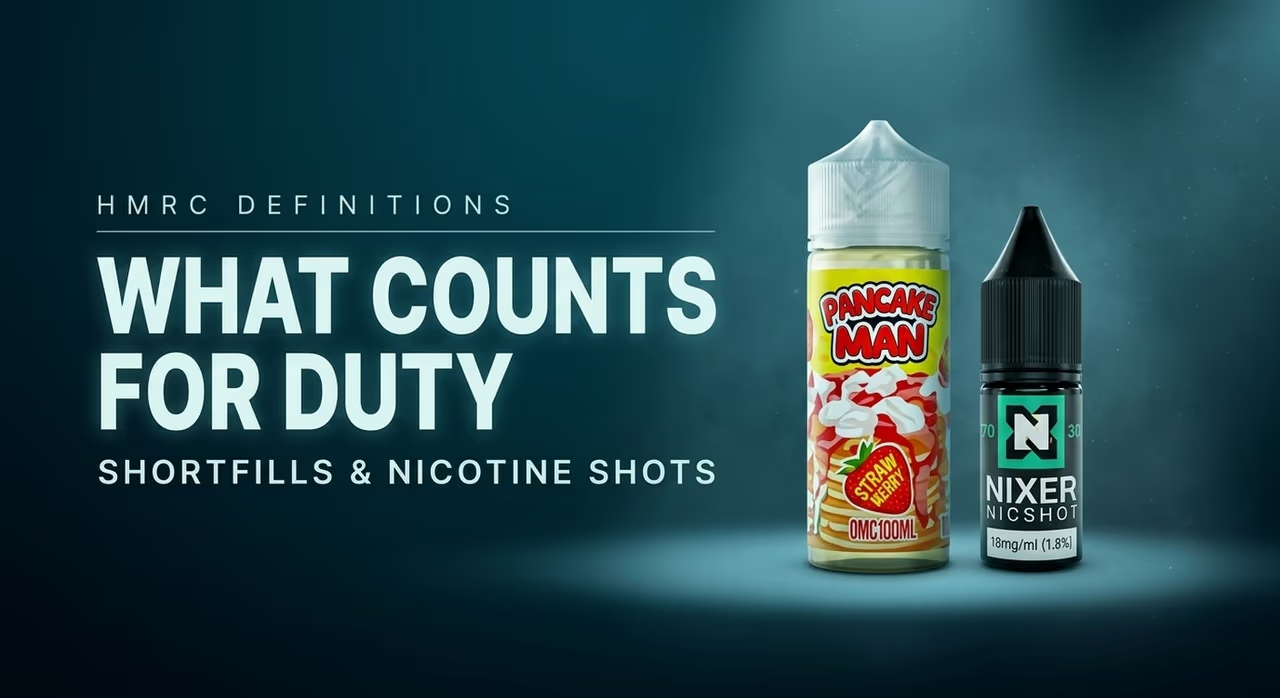
- shortfills are bottles deliberately not filled to the top and usually nicotine free,
- longfills are concentrates requiring a base and nicotine addition,
- nicotine shots are concentrated nicotine additions.
That framing matters because the liquid's intended role is part of the HMRC classification analysis.
You should start each SKU with a classification card containing:
- packaging text (name, stated volume, nicotine strength, base, nicotine status)
- supplier declaration on intended use (refill mix, nicotine shot, prefilled or mixed ready-to-sell)
- incoming documentation used for volume evidence (invoice, labels, delivery note)
- whether duty is already accounted for or release workflow is pending
Shortfills: what can go wrong in operations
Shortfills can be incorrectly bucketed because HMRC defines them by purpose and composition, even when they resemble ordinary refill bottles.
The issue is usually not "does it contain nicotine" alone. The issue is whether HMRC treats the line as a component or a retail-ready vape liquid route.
A useful workflow:
- Capture exact phrasing from the pack and manufacturer documentation.
- Record nicotine concentration and any base/liquid details.
- Record whether the SKU is sold as part of a refill workflow versus a finished consumable flow before choosing the duty-payment path.
- Hold if the pack wording and invoice are inconsistent until reconciliation is written up.
Shortfill vs. ready-to-sell confusion
HMRC's shortfill definition is tied to purpose and composition. For teams, the practical edge is when shortfills are sold in ways that mimic finished vape readying. Your safest path is to document every ambiguity.
Nicotine shots and mixed products
Nicotine shots are often the highest-friction item for operators.
- They are concentrated nicotine additions.
- They may be sold in ways that look like a direct product but often function as part of a mixing flow.
- Import and duty workflows depend on how they are supplied and used in your chain, not only the bottle label.
Use this control:
- confirm whether the SKU is sold as an additive component
- map the SKU to the final liquid preparation path
- ensure the declared intended use is supported by both pack and invoice
- avoid assuming all nicotine shots are promotionally or commercially equivalent to refill liquids
Mixed liquids: where edge decisions happen
Mixed liquids often sit between component and ready stock. In practice, teams should compare them against this matrix before selecting a duty and release workflow:
Mixed-liquid classification matrix
Hold-and-escalate rule for uncertainty
Do not release mixed SKUs to customer channels while intent is ambiguous. Build a named escalation queue with a deadline and owner before any duty-payment or release assumption is used.
Verify HMRC-relevant descriptors from supplier pack, invoice, and product page
Record the evidence and owner before the SKU is released.
Cross-check HMRC duty treatment vs product category (shortfill, longfill, nicotine shot, other)
Record the evidence and owner before the SKU is released.
Confirm intended-use pathway in writing (retail-ready vs component mix)
Record the evidence and owner before the SKU is released.
Validate declared volume with supporting evidence and record reconciliation rule before payment or release
Record the evidence and owner before the SKU is released.
Set release status: approved / on hold / escalate
Record the evidence and owner before the SKU is released.
Add date checked and owner for every hold decision
Record the evidence and owner before the SKU is released.
Evidence-first workflow (use this flow today)
Use this sequence for every incoming lot, alongside the relevant Vaping Products Duty payment process:
If a mixed liquid lacks clear intended-use evidence, treat it as uncertain and apply this sequence:
- Verify HMRC-relevant descriptors from supplier pack, invoice, and product page
- Cross-check HMRC duty treatment vs product category (shortfill, longfill, nicotine shot, other)
- Confirm intended-use pathway in writing (retail-ready vs component mix)
- Validate declared volume with supporting evidence and record reconciliation rule before payment or release
- Set release status: approved / on hold / escalate
- Add date checked and owner for every hold decision
Where this changes importer timing
For import planning, classification errors usually surface at receipt or release. That impacts purchase planning and potential repack/relabel work.
A cleaner process reduces surprises:
Do not release mixed SKUs to customer channels while intent is ambiguous. Build a named escalation queue with deadline + owner before using a duty-payment workflow.
- Fewer last-minute release holds from duty teams
- Clearer reconciliation when volumes or labels conflict
- Predictable escalation for mixed or ambiguous SKUs
- Consistent evidence trail for import/export checks and supplier queries
For connected operator workflows, compare this with our Vaping Products Duty and duty stamps retailer guide, supplier-readiness audit, and VPD returns calendar.
FAQ
Source references
- HMRC Internal Manual (Vaping Products Duty and Vaping Duty Stamps guidance): definitions including shortfills and nicotine shots - https://www.gov.uk/hmrc-internal-manuals/vaping-products-duty-and-vaping-duty-stamps-guidance/vpds013000
- GOV.UK: How to pay Vaping Products Duty - https://www.gov.uk/guidance/how-to-pay-vaping-products-duty
- GOV.UK: Importing and exporting vaping products - https://www.gov.uk/guidance/importing-and-exporting-vaping-products
- GOV.UK: Prepare for Vaping Products Duty and the Vaping Duty Stamps Scheme - https://www.gov.uk/government/publications/preparing-for-vaping-products-duty-and-the-vaping-duty-stamps-scheme/prepare-for-vaping-products-duty-and-the-vaping-duty-stamps-scheme
- Legislation: Tobacco and Vapes Act 2026 - https://www.legislation.gov.uk/ukpga/2026/18/enacted