Business continuity for refillable pod kit stock in post-disposable UK retailing
A practical UK guide to moving from disposable-heavy stock to refillable pod continuity without overbuying.
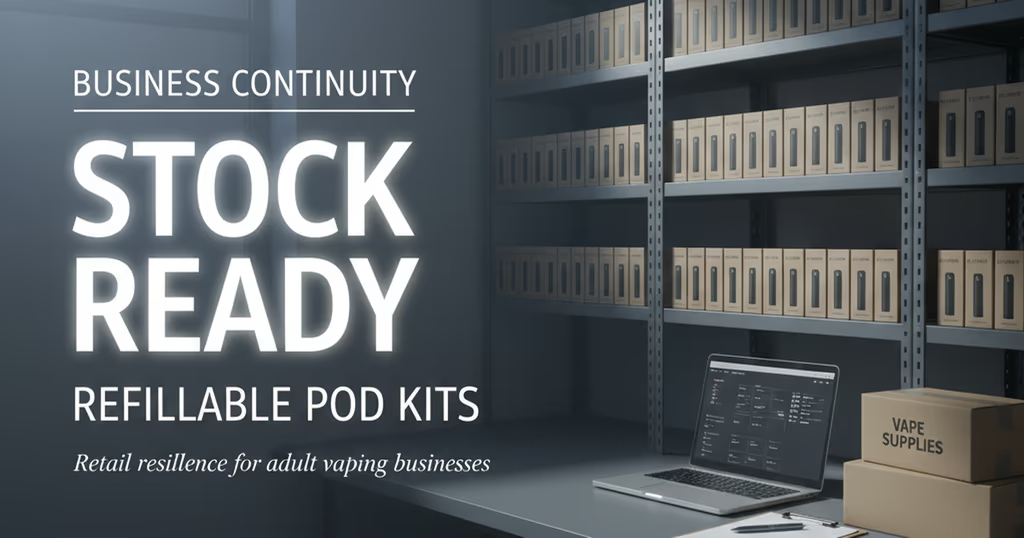
- Short version: since 1 June 2025, businesses must remove single-use vapes from stock and focus on reusable systems.
- Most UK retailers survive this transition by leading with refillable hardware bundles + controlled coil/liquid replenishment instead of one-off products.
- Use age checks, no youth-coded merchandising, and clear supplier verification as your top three compliance guardrails.
- Start with cash-disciplined ranges: slower-moving high-margin accessories, faster-moving lower-margin coils, and tighter purchase cycles on liquid SKUs.
- Build a quarterly pre-order model with your distributors so demand spikes do not collapse margins.
Single-use vape bans and disposal duties have changed what sells in UK vape retail, but they have not ended demand for adult nicotine products. The category is moving toward reuse: repeatable devices, repeatable top-ups, and repeatable behaviour. If you are an operator, importer, or local shop, this transition is not only a stock issue — it is a cash-flow and compliance issue. This guide is written from that practical angle, and it focuses on what to buy, what to hold back, and what to change in your day-to-day workflow.
In plain terms, you now sell fewer one-time product moments and more ongoing refill cycles. That is where continuity comes from: a loyal customer who buys a base device once can buy coils, pods and liquid repeatedly, while you keep your margins cleaner and your shelf space less exposed to regulatory whiplash.
What changed on 1 June 2025 and what it means for your shelf
The legal pivot started with the single-use vape ban. Government messaging is clear that single-use, disposable vapes are no longer a category you can carry at all; this affects sales, pricing assumptions and display decisions.
For your shelf, this changes your assumptions in three concrete ways:
- Obsolescence risk rises for impulse SKUs because single-use products can stop being sellable overnight.
- Turnover profile shifts toward refill cycles, especially where adults are already loyal to one device format.
- Returns and unsold stock costs rise if your stock plan stays tied to last season’s disposable consumption patterns.
That said, the legal change does not force every retailer into every refillable format. Some local markets still respond faster to pod kits, some to mod systems, and some to both. The difference is simple: your assortment and replenishment logic now needs a continuity layer. You are not replacing one full category with another; you are reducing velocity risk while preserving adult purchase pathways.
Primary source points to keep close: Single-use vapes are banned from 1 June 2025 and the operational guidance under single-use vapes ban for suppliers and retailers.

Why refillable pod continuity is a retail advantage, not just a trend
Refillable systems create three advantages in post-disposable conditions:
- Predictable replenishment: coils, pods and liquid have repeat demand curves, so you can forecast reorders with less chaos.
- Lower legal turnover noise: a refillable range changes your shelf from a pure novelty catalogue to a serviceable adult routine category.
- Higher basket potential: customers already in for liquid are naturally exposed to device care, extra coil stock and flavour pairings.
The important commercial correction is to avoid treating pod kits as a one-time hit product. If your mix remains one-and-done, you are leaving the new economics on the table. Treat your range in system families: device, pods, liquid, coils, and backups. A customer who buys only one type of SKU stays shallow spend. A customer who buys accessories and top-ups stays in your recurring revenue layer.
From a store-ops perspective, this is where continuity gets measurable: stock turn across replenishment SKUs can usually be stabilised with tighter buying cadence. You can place smaller orders more often, rather than tying cash to a single bulk launch. For independent shops, that is often the difference between a smooth month and carrying stale stock for 20–30% of working capital.
If you run online, this same logic becomes metadata planning: list refill bundles by use case, keep your product pages transparent on nicotine level and refill compatibility, and make repeat purchase steps frictionless. Clarity in titles and descriptions is a retention asset.
A practical 90-day continuity stock plan

Avoid the instinct to double your stock in every refillable SKU the week after disposables disappear. That just shifts risk from one product format to another. Use a three-bucket model instead:
Bucket 1: Core hardware (stable shelf)
Keep your core hardware mix intentionally smaller than before. Choose fewer, better-margin models with clear compatibility families. Your goal is not full-format abundance; it is dependable continuity. Set reorder points lower but review weekly because hardware demand usually moves with brand-level visibility, local footfall, and new-stock promotions.
Good indicators for this bucket are:
- Low margin but critical for acquisition (entry-level starter kits)
- Strong return rates for replacement parts and maintenance
- Supplier reliability and lead-time transparency
Bucket 2: Consumables (high repeat)
This is your revenue engine. Keep a broader choice than hardware, but narrow by sell-through and liquidity. Track pod and liquid SKUs weekly, not monthly. In this category, forecast accuracy improves when you track two numbers every day: reorder urgency and expiry/age windows.
Run pre-order windows with trusted distributors so you are not carrying dead stock while still having replenishment confidence. For independent stockists, this is where the biggest margin leak usually appears — too much one-off discounting to move long-tail products.
Bucket 3: Accessories (profit stabiliser)
Accessories are often ignored until turnover breaks. They can provide a steady cushion if managed carefully: carry enough to support your installed base, not enough to become dead inventory. Typical stabilisers are batteries, chargers, mouthpiece kits, storage and carry accessories.

Use one-quarter of your previous disposable spend as a baseline for accessories, then shift weekly based on actual refillable conversion rates. If pod adoption outpaces battery turnover, reduce hardware and expand replenishment accessories instead.
Regulatory and compliance guardrails you cannot ignore
UK adult-focused retailing in this category now has stronger scrutiny around youth protection and product compliance. You should not frame this as optional. Your best operational edge is doing boring compliance work consistently:
- Age checks: enforce on every sale channel, with clear verification SOPs for in-store and online flows.
- Product legality checks: verify legal product status and documentation before acceptance into stock.
- Storefront and content hygiene: no imagery or copy that suggests youth-coded appeal.
- Waste and service obligations: align your in-store process with official disposal guidance where applicable.
Use official pages as the default reference set in operations meetings: single-use vapes ban guidance, plus the Tobacco and Vapes Bill becoming law announcement for the broader enforcement direction. For product compliance specifics where your buyers query legality, rely on GOV.UK guidance pages and MHRA-facing documentation rather than private supplier claims.
Also watch licensing discussion in official channels closely. The future will likely tighten enforcement and may alter routine retail obligations. Prepare now by documenting your own controls, because your evidentiary trail is part of compliance resilience.
What this means for your next 30 days

Use this as a practical 30-day reset:
1) Clean your front-end: remove any discontinued disposable-style promotions and create a reuse-first category page.
2) Tighten SKU planning: split your assortment into hardware, consumables, and accessories and enforce minimum service levels by family, not by brand fantasy.
3) Cut top-up times: move from fixed biweekly bulk orders to demand-triggered replenishment for top-up SKUs.
4) Align staff training: every shift knows the exact refusal protocol for underage checks and the top 5 compliant product handling rules.
5) Keep your copy compliant and adult-first: value statements should focus on utility and consistency, not youth-coded taste framing.
The result is a stock system that can absorb demand shifts, defend margins, and avoid surprise write-offs.
Bottom line for operators and buyers
The post-disposable world is not a short-term pivot. It is a stock architecture reset. Retailers who treat it as a legal-only issue usually end up repeating the same margin mistakes later. Retailers who treat it as workflow design plus compliance discipline often hold stronger margins and less aged inventory through the same demand cycle.
If you are planning for continuity, start with the basics: fewer core SKUs, stronger replenishment cycles, sharper checks, and tighter communication that is unmistakably adult-focused. That is the play that keeps your operations running while the policy landscape continues to evolve.
Internal links to read now
Useful context on this site:
Source references
MHRA/GOV.UK: E-cigarettes: regulations for consumer products